
Charges
The published cost formula, and the charges this site cares about
Three components, one of which is the declaration itself. Plus the exceptions: the second-hand platforms, the storage clock and the clearance fee that lands on the recipient.
Product search above; charges below.
Home / Charges, rates and the storage clock
The total, as the operator writes it
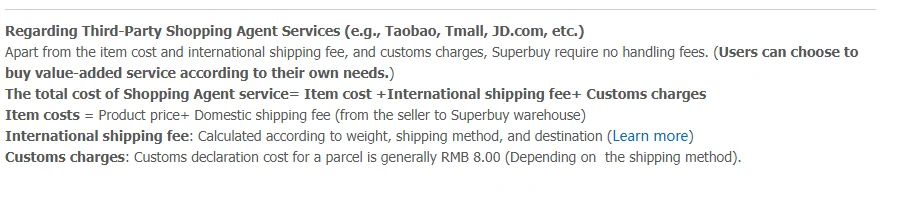
The service charge page writes the total as a sum of three things, and names customs charges as the third. It then prices the declaration itself at a small flat figure, depending on the shipping method.
That is the whole fee structure for a mainstream marketplace order. No purchasing service fee on Taobao, Tmall, JD.com or 1688, international shipping calculated by weight, method and destination, and the declaration cost on top.
Operator service charge page, read 2026-10-10: "The total cost of Shopping Agent service = Item cost + International shipping fee + Customs charges" and "Customs declaration cost for a parcel is generally RMB 8.00 (Depending on the shipping method)."
Where the purchasing fee is not zero
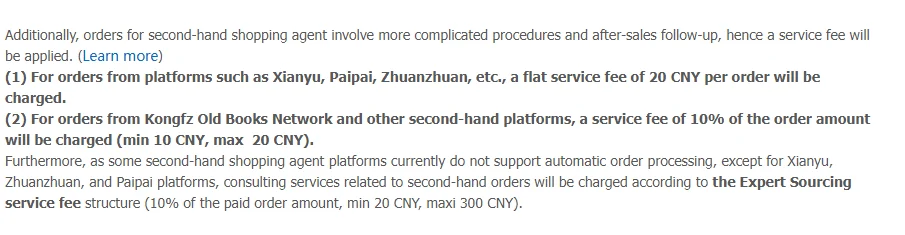
Second-hand platforms are the exception and the page is specific about it. Xianyu, Paipai and Zhuanzhuan carry a flat charge per order. Kongfz and the other second-hand platforms carry a percentage of the order amount with a floor and a ceiling. Expert sourcing has its own percentage with its own, much higher ceiling.
This matters here for a reason beyond cost: second-hand goods are also one of the five categories that sit outside the return and exchange window, which is on the cover page.
The exchange rate that actually applies
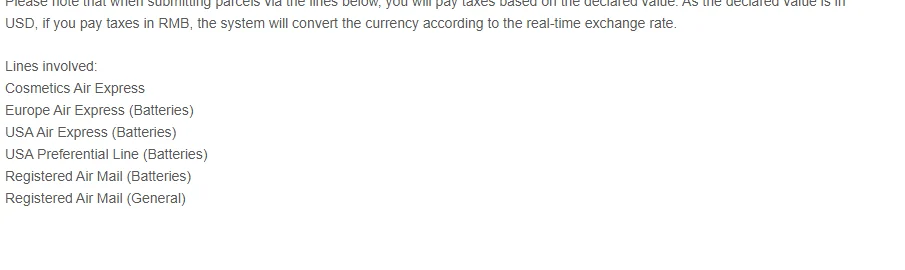
There is one place on this subject where a currency conversion changes a bill, and it is narrow. On the six lines named in help 1384, tax is charged against the declared value, the declared value is held in US dollars, and a bill settled in yuan is converted at the real-time rate.
Everything else about currency on an order is ordinary: you top up in your own currency through the payment methods the operator documents, and the item and domestic shipping are paid in yuan. The conversion that can surprise you is the tax one, on those six lines.
Help 1384, article last updated 2023-07-10: "As the declared value is in USD, if you pay taxes in RMB, the system will convert the currency according to the real-time exchange rate."
Storage days counted from the inbound scan
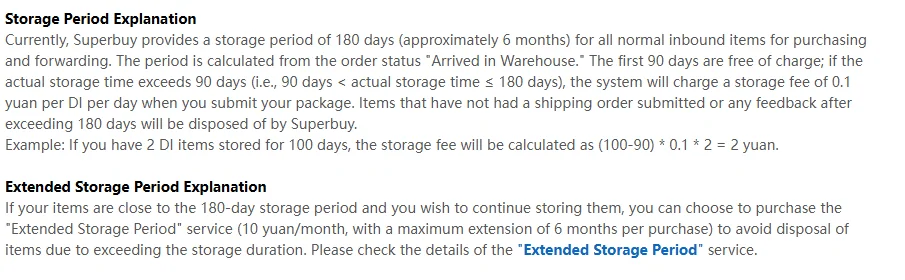
The storage window runs from the moment an item reads Arrived in Warehouse, not from payment. The first ninety days are free of charge and the total period runs to one hundred and eighty days, with a per-item daily rate in between. The article works through a two-item example to show how it adds up.
Relevant to this site because the storage clock and the declaration decision interact: holding items back to combine them later is a legitimate way to stay under a line's ceiling, and it is also the thing that runs the clock down.
Extending it is a priced service
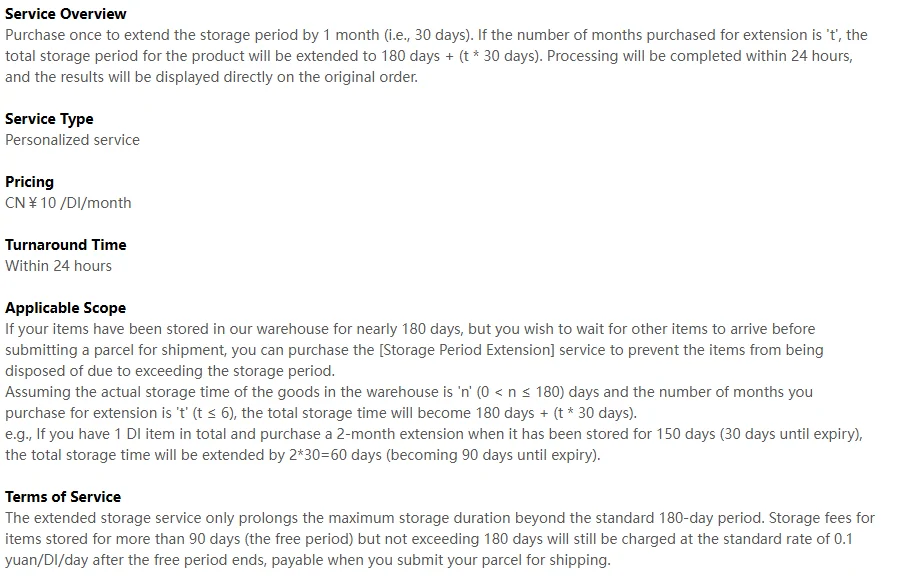
Extension is sold by the month, per item, and the article spells out the arithmetic: the total period becomes the standard period plus thirty days per month purchased, up to a stated maximum. Processing is within 24 hours.
The terms note that extension only prolongs the maximum duration. Storage fees for items past the free window are still charged at the standard daily rate, payable when you submit the parcel for shipping.
Clearance fees and duty land on the recipient
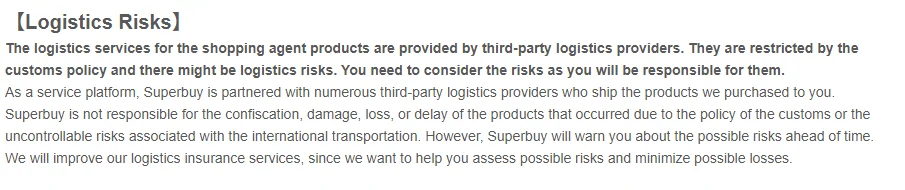
Two charges sit outside the operator's invoice entirely.
Customs duty, when a parcel is taxed, is assessed by your own authority against your declared value and its own threshold. And the clearance fee, where one applies, is paid by the person receiving the parcel. Help 1047 gives the one worked example in these pages: on a specific Canadian line, a parcel over five kilograms or above the exemption may be taxed and charged a clearance fee, with a figure attached, paid by the recipient.
That is the only clearance figure the operator publishes, so it is the only one quoted here. For every other destination the honest answer is that the fee exists, the amount is set locally, and no agent can quote it for you.